
How to Apply Thumb Tape for Hook Grip
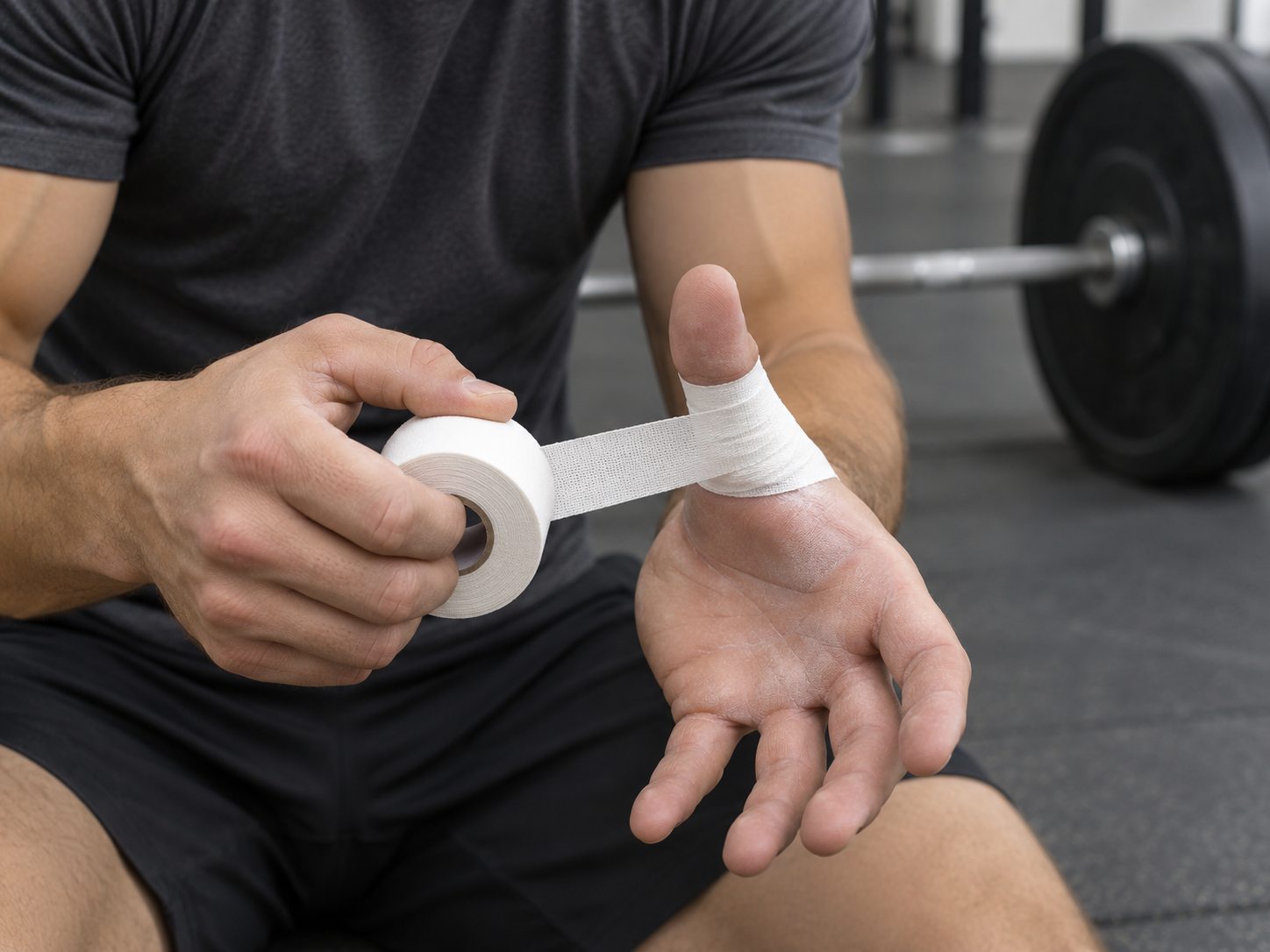
ABG Stretch Tape can be used by some lifters to cover the thumb during hook-grip work. A useful application stays smooth, allows normal thumb movement, and is checked before loading the bar.
Prepare the thumb
Start with clean, dry skin and decide how much coverage the lift needs. Skin oils, sweat, chalk, and lotion can reduce adhesion. If adhesive products have irritated your skin before, test a small piece first and follow the package guidance.
Apply a light layer
Tear a short strip and guide it around the thumb without pulling it tight. Smooth each pass so it lies flat. Thick overlaps can bunch between the thumb and fingers, changing how the bar sits in the hand.
Rehearse the hook grip
Close the fingers over the taped thumb around an unloaded bar. Check that the tape does not wrinkle or catch and that the thumb still bends comfortably. Adjust or replace it before warm-up sets if it shifts.
After training
Remove tape gently and wash the skin. Stop using it if irritation, numbness, or unusual discomfort appears. Review ABG Stretch Tape details and allergy information on the product page.
Before you start, decide which small area needs coverage and use only enough tape to protect it while keeping the thumb mobile. Avoid building up thick layers across a joint, where bulk can change how the grip sits. Check the application on an empty bar before loading.
A simple wrap usually works better than a thick sleeve of tape. Keep the strip smooth, leave the tip and joint free if that suits your grip, and avoid pulling the tape tight enough to restrict movement. Skin can react differently to adhesives, so remove it if irritation develops. After a few light warm-up repetitions, check whether the tape has shifted or folded before moving to heavier work.
Check the tape again after the first few working repetitions, since sweat and repeated thumb pressure can loosen an edge. If it starts to bunch or the bar feels different in your hand, stop between sets and reapply it smoothly. Keep spare tape accessible so you are not tempted to continue with a loose strip.
Removing tape carefully is part of the application process. Peel it back slowly, following its direction around the thumb instead of pulling sharply away from the skin. Supporting the skin with your other hand can make removal more comfortable. If it adheres firmly, follow the product directions rather than tearing it off quickly, particularly if your skin is sensitive. After removal, check the covered area for redness, tenderness, blisters, or broken skin. Wash away sweat, chalk, and adhesive residue, then dry the hand. Give the skin time to recover if it feels tender, and do not apply a fresh wrap over irritated skin simply because another workout is scheduled.
Consider what worked before your next session. Did the strip stay in place? Was the covered area the source of friction? Did the wrap feel too thick? A quick note in your training log can help you repeat a comfortable application. If tape consistently shifts, revisit skin preparation, strip length, and placement. If the same spot remains painful, the answer may be an adjustment to training or technique rather than more adhesive. Tape can be useful for some lifters, but it is optional; it is reasonable to train without it when that feels better.
Store and handle tape according to its packaging. Keep it in a dry place and use a fresh piece when the product becomes dirty or loses adhesion. Do not share used tape that has contacted another person's skin. Follow the label for product-specific storage and use information. Keeping supplies clean and ready makes it easier to apply a fresh strip next time rather than trying to reuse one that has already stretched or picked up chalk.
A few common application problems are easy to troubleshoot. If tape rolls at the edge, the strip may cross a crease or have been stretched as it was applied. Try a shorter piece, position its edge on a flatter area, and smooth it down without tension. If it slides, check whether the skin was completely dry and whether chalk or lotion remained under the adhesive. If it feels bulky, remove a layer and cover only the point of contact. These small changes are often more useful than making the wrap tighter.
If your fingers catch on a seam as they close over the thumb, move the overlap away from that contact point or start again with a fresh strip. Do not keep adding material to secure a loose edge, since the additional thickness can create a new ridge. Likewise, if the thumb feels restricted when you bend it, the wrap may cross a joint too tightly or contain too many passes. Remove it and reassess rather than trying to train through an uncomfortable fit. Any change that affects grip security is a reason to pause and check before continuing.
Keep the first few trials simple. Choose a familiar exercise, use a light warm-up, and compare the feel with your usual grip. Avoid changing tape placement, grip width, and loading all at once; a single adjustment makes it easier to notice what helped. Some athletes find a thin layer useful for longer pulling sessions, while others prefer no tape or only occasional coverage. Your own comfort and control are more relevant than copying another lifter's exact wrap.
Bar texture and training conditions can also affect how the tape behaves. A rougher bar, humid gym, chalky hands, or a longer session may make an edge lift sooner. That does not necessarily mean you should apply the strip more tightly. Instead, check the skin preparation, use an appropriate short piece, and inspect it between sets. If the material becomes wet or dirty, replace it. Keep the bar safely supported before attending to your hands, and never try to fix tape while gripping a loaded bar.
It can help to prepare the tape before chalking your hands. Chalk can leave a fine layer on the skin that interferes with adhesive, so clean, dry skin is the better starting surface. After the tape is in place and you have checked the fit, use chalk as you normally would, taking care not to cake it around a lifted edge. If you need to reapply tape mid-session, clean off chalk and sweat first where practical, then dry the skin. Pressing fresh tape onto a dusty surface may make it peel quickly.
Keep scissors and tape away from the bar path and set them down before lifting. A loose strip or backing on the floor can become a distraction or slip hazard, so dispose of scraps promptly. These are small practical details, but they help keep a training area tidy and let you focus on the set. If you train with a coach or partner, let them know you are adjusting your grip so they can watch for a change in bar control during light practice.
For lifters new to hook grip, discomfort can be part of the learning process, but sharp pain, numbness, or worsening skin damage should not be ignored. Build familiarity gradually and take advice from a qualified coach about technique and progression. If discomfort persists outside training or the thumb appears injured, seek appropriate health advice. Tape should never be considered proof that a painful or unstable grip is safe to continue using.
There is no universal number of turns or strip length because thumbs and preferences differ. Use the minimum coverage that stays smooth and comfortable for your hand. Leave enough mobility to open and close the fingers naturally, and check the fit on the actual bar you plan to use. If one small piece works, extra layers may only add bulk. If the strip does not cover the friction point, adjust its position instead of wrapping the whole thumb automatically.
Use your warm-up as a routine check: look at the edges, close your hand around the bar, and confirm that the tape has not moved. Repeat the check after the first working repetitions and whenever the grip feels different. If the wrap stays flat, the thumb moves normally, and the bar remains secure, continue to monitor it as needed. If any of those conditions change, set the bar down and correct the application before the next set.
Over time, review whether taping continues to help. Your grip, training volume, and tolerance may change, so there is no need to follow the same routine indefinitely. If the tape no longer improves comfort, try a lighter application or leave it off during an easy session. If you do use it, repeat the same basic checks: clean skin, a relaxed wrap, comfortable movement, and a light rehearsal before loading. A consistent routine makes it easier to spot when the fit has changed and to make a sensible adjustment.
Browse weightlifting belts, wrist wraps, and ABG Stretch Tape, or contact Schiek Sports Australia with a product question.